AI-Augmented Product Design
Project Overview
Client: Invisible Ingredients (2026)
Industry: Environment
Timeline: 4 weeks
Role: Lead Designer
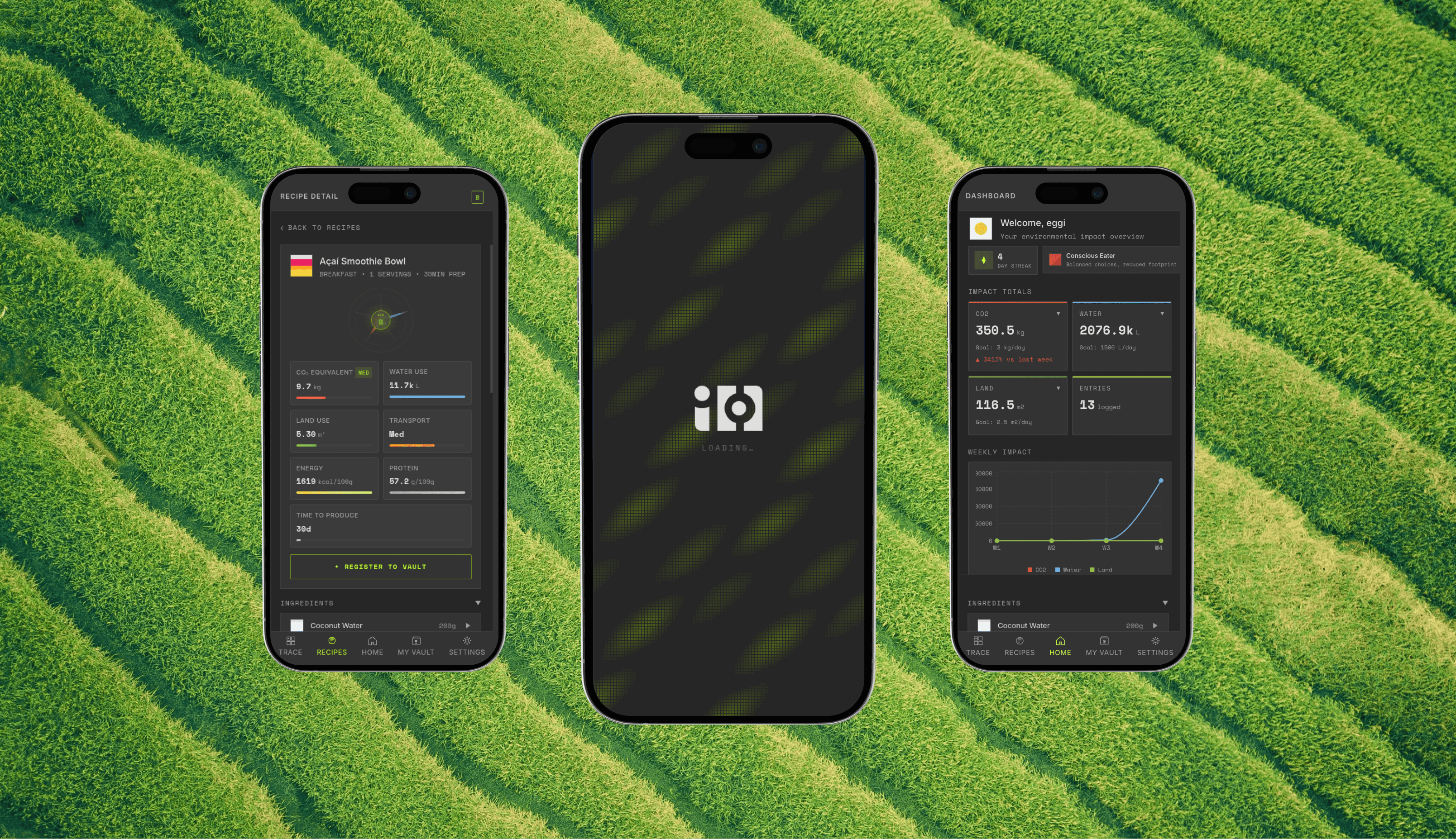
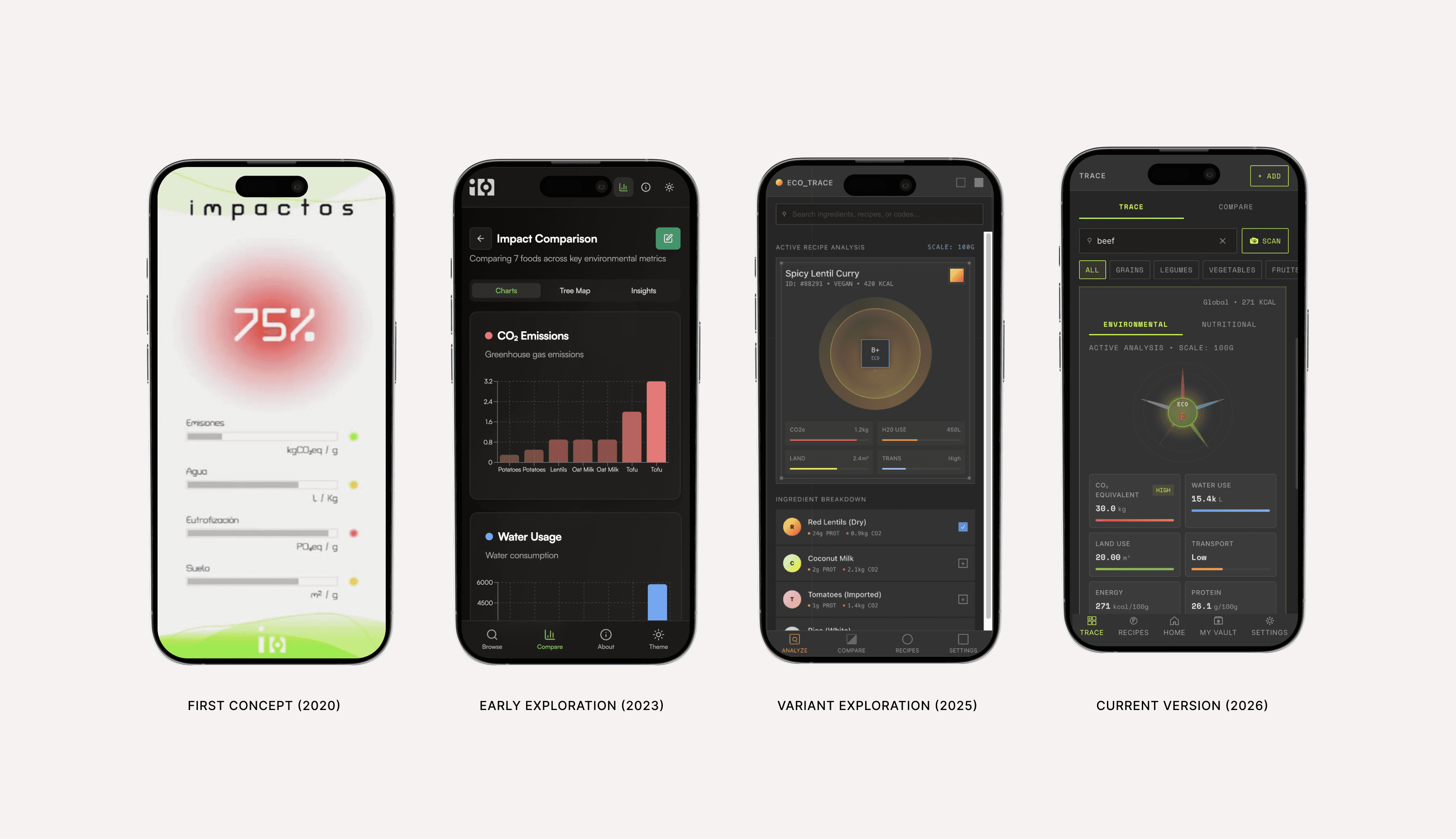
Invisible Ingredients is a conceptual app designed to make the environmental impact of food visible helping users understand, compare, and track the real cost of what they consume. The original idea came from my final project back in university (2020), so I decided to explore the same concept, but using the tools available nowadays to get to a working, more realistic approximation.
This personal project explores how AI can transform complex, often hidden data into clear and actionable insights. The experience combines environmental metrics, nutritional data, and adaptive recommendations into a system that feels both analytical and personal. Through a minimal, data-focused interface and a dual light/dark visual system, the app reframes food tracking as impact awareness—turning everyday decisions into measurable, evolving patterns.
Try the beta version (iterating) here

Project Description
Food information today is abundant, but rarely clear. Labels are inconsistent, sustainability claims are often ambiguous, and the real environmental cost of food remains largely invisible.
Invisible Ingredients was created as a response to this gap.
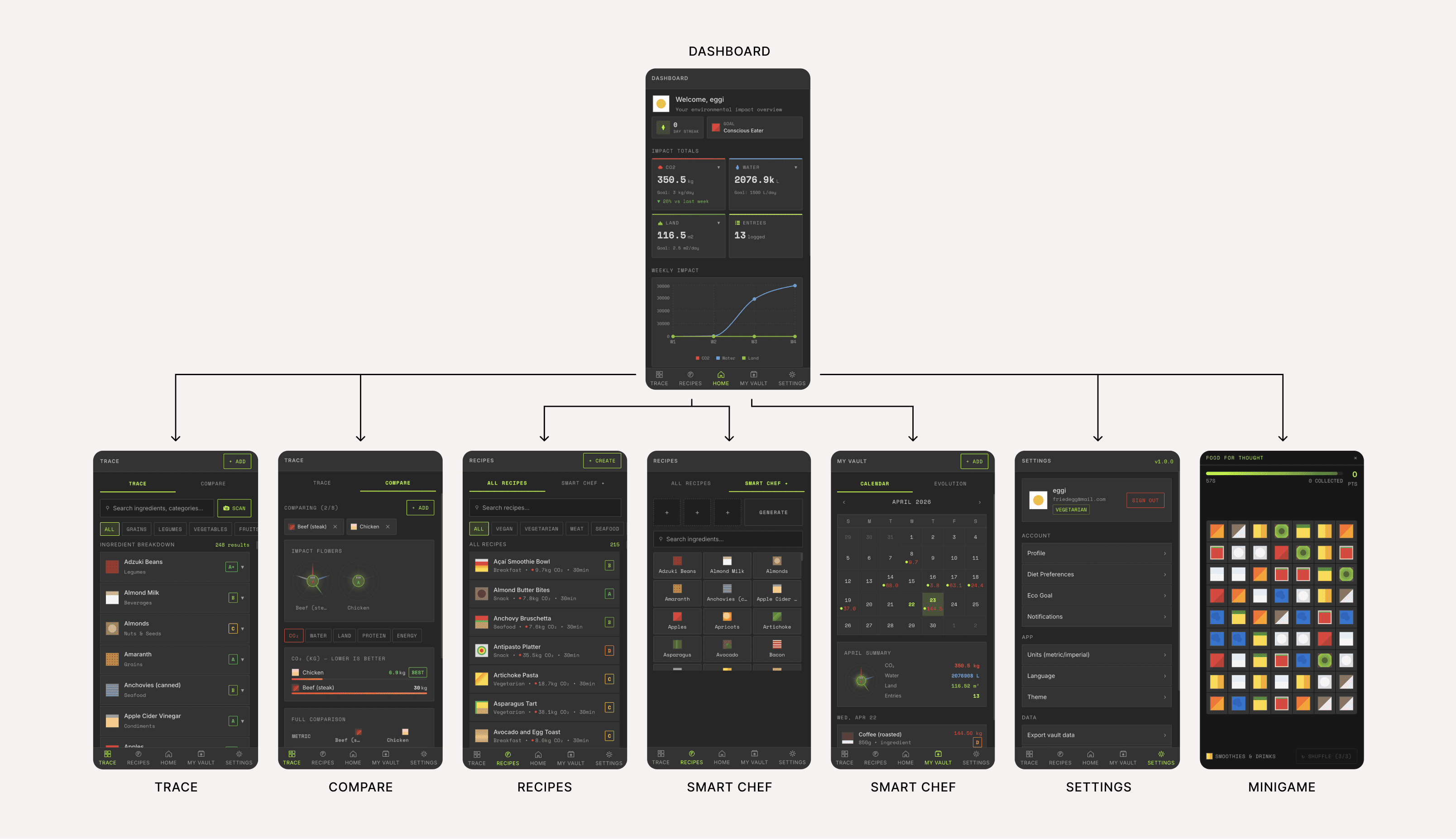
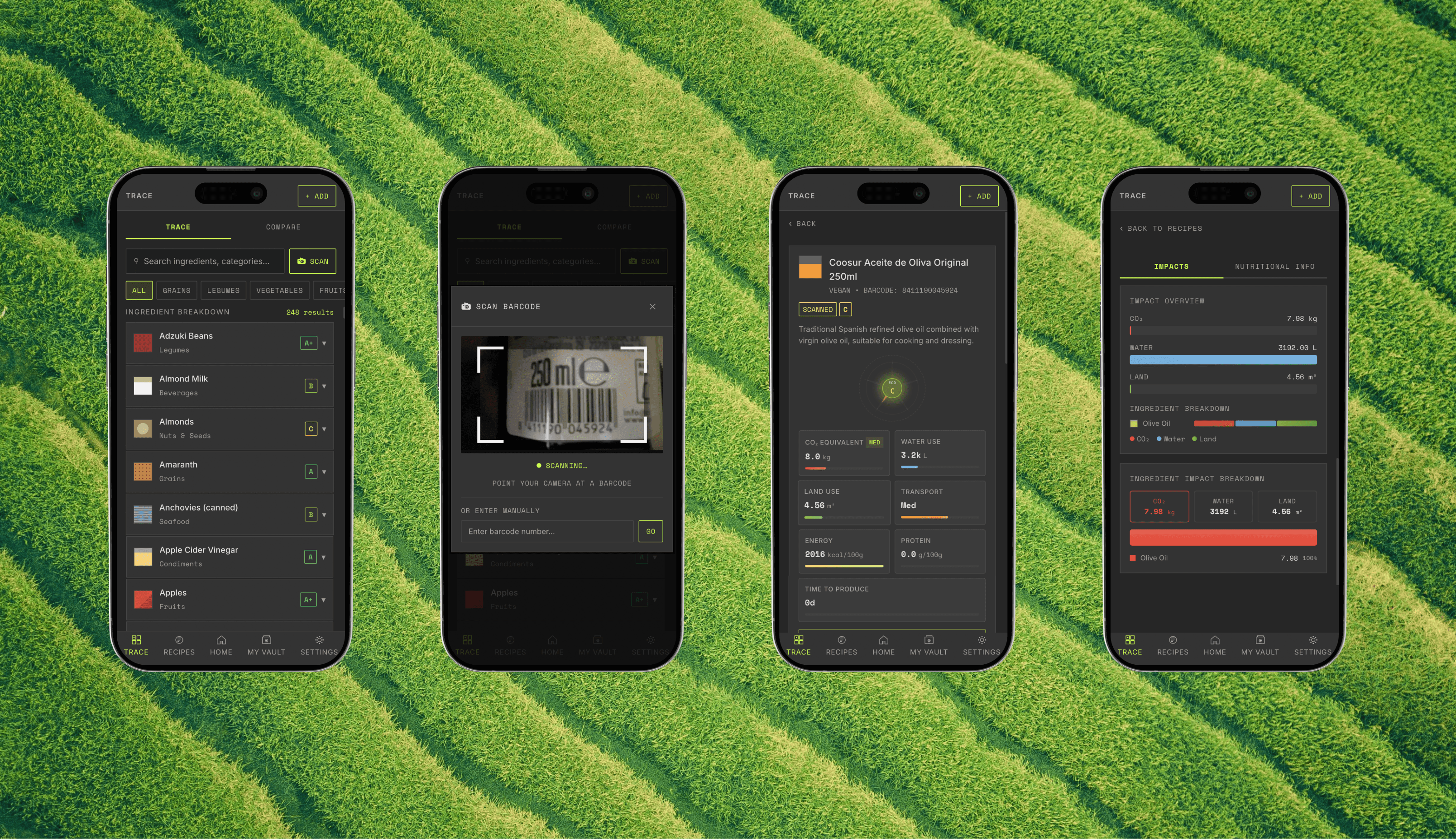
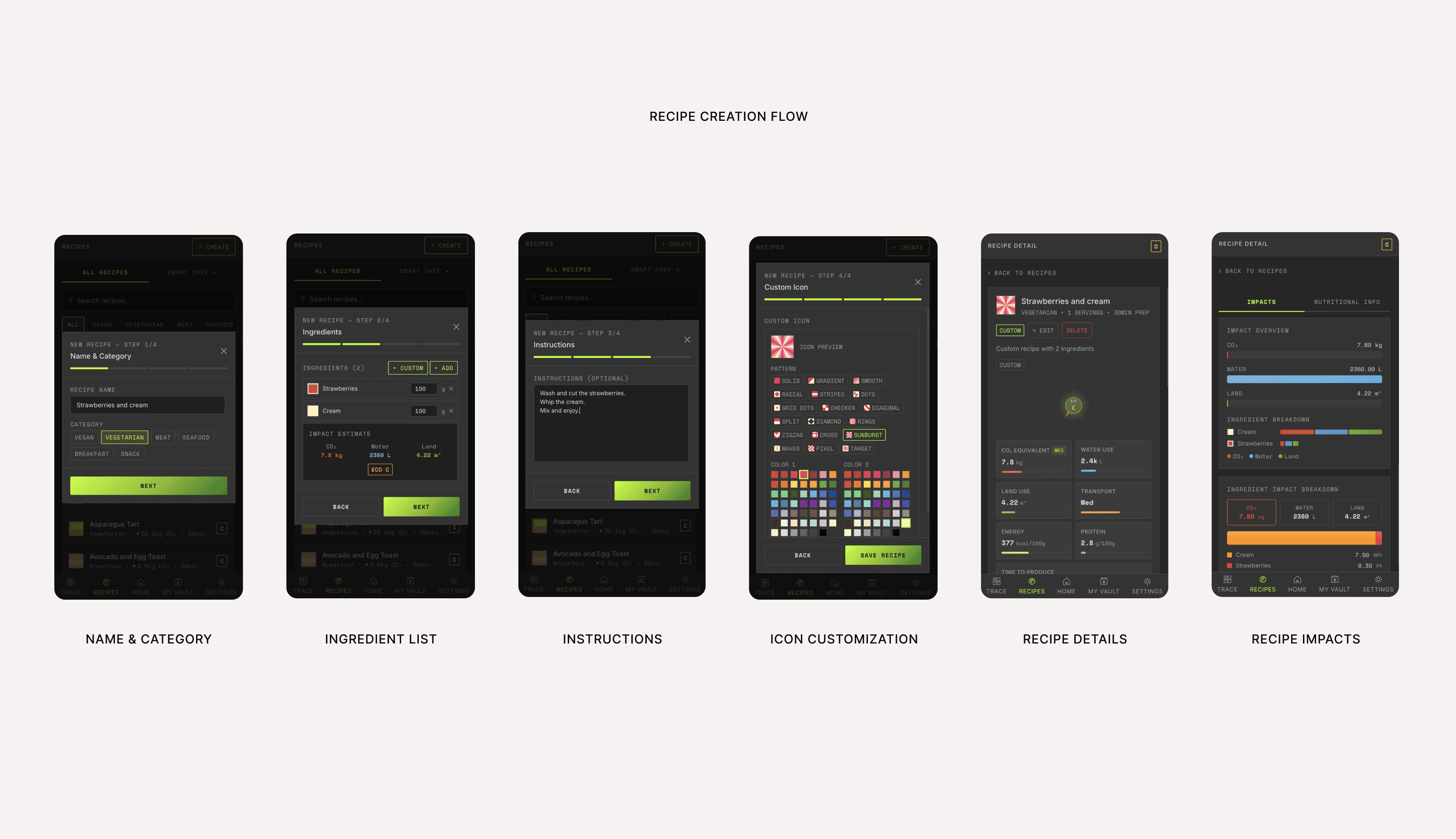
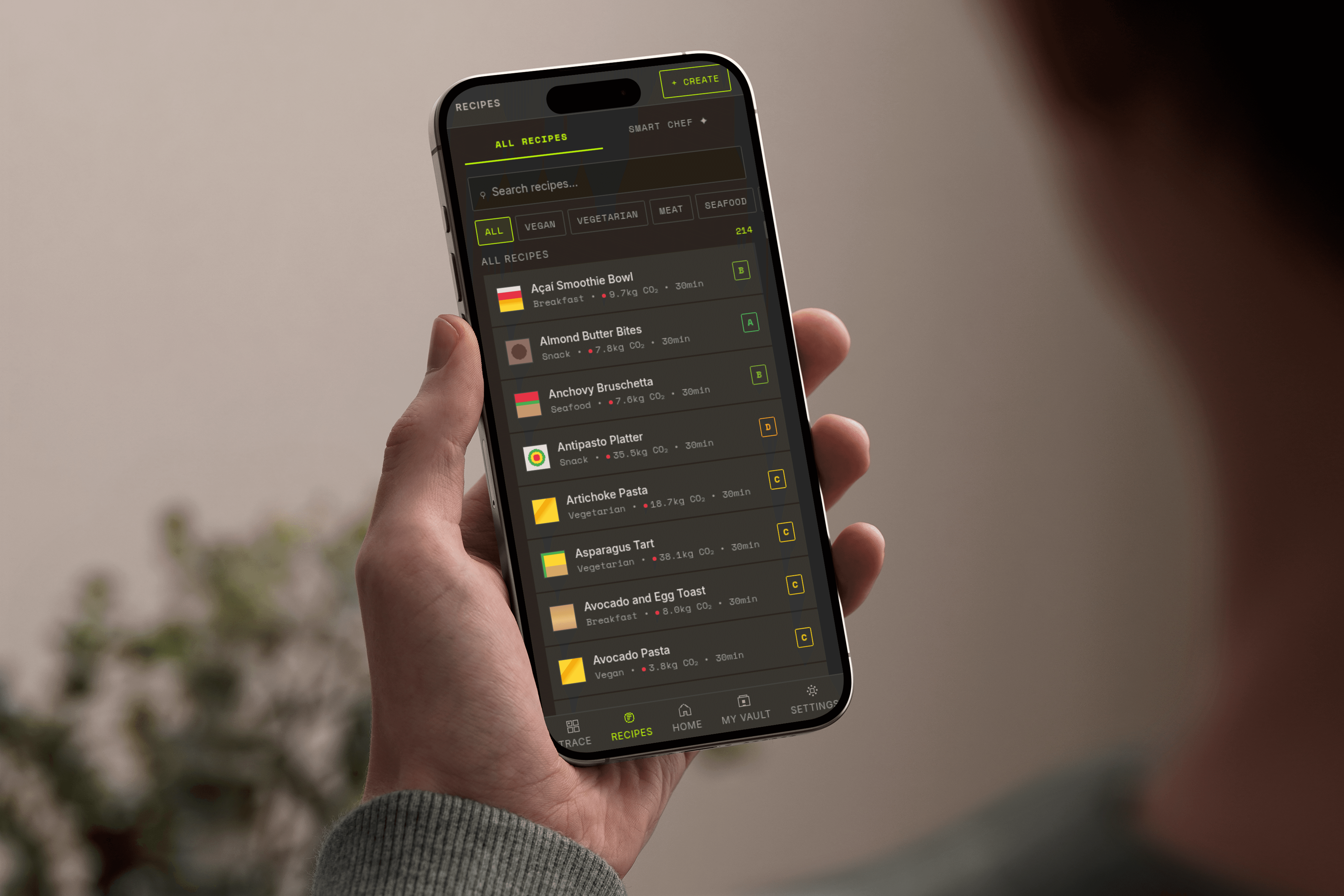
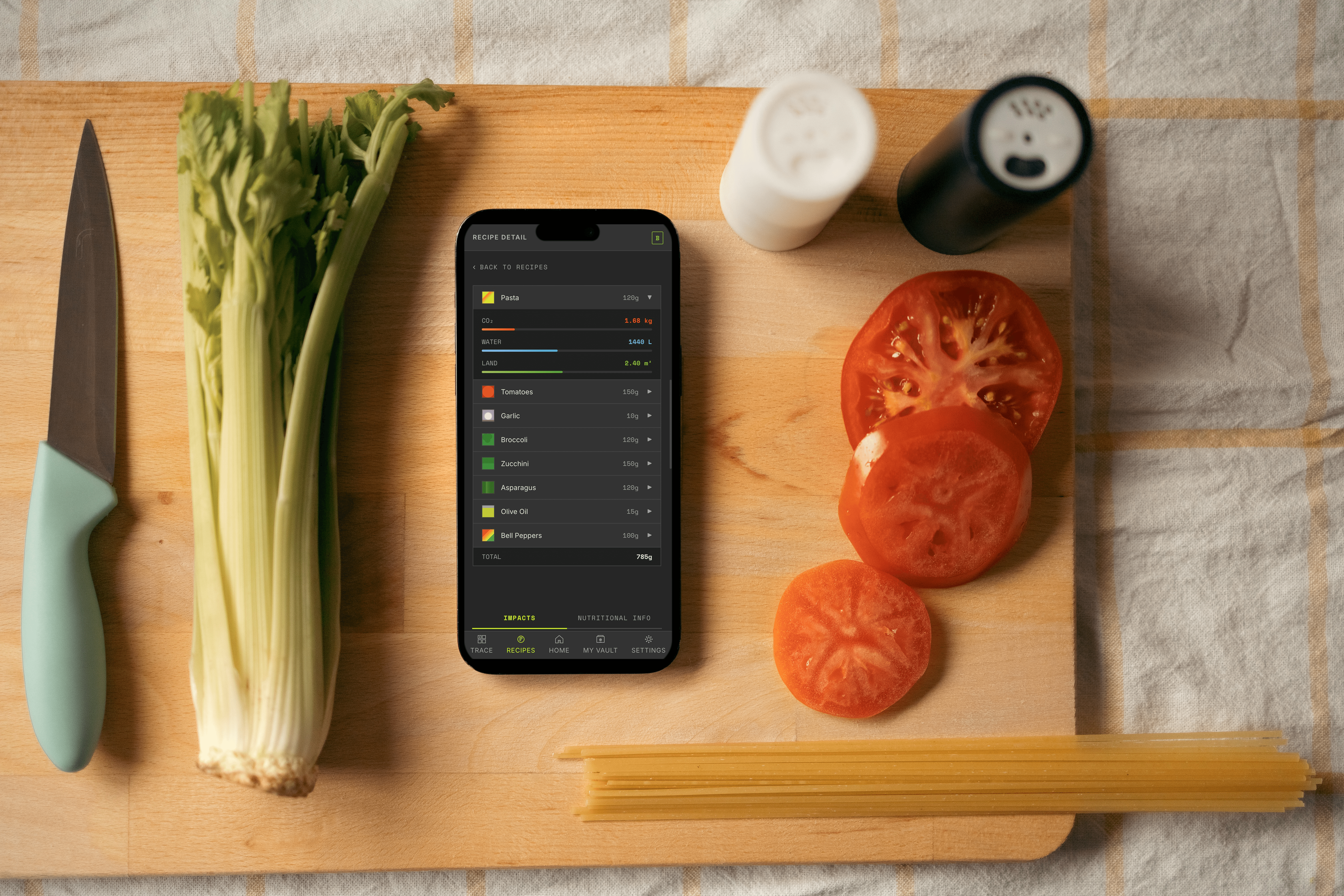
The app introduces a system where users can explore the environmental impact of food through measurable data—CO₂ emissions, land usage, water consumption, and production time—combined with nutritional context. AI plays a central role in translating this complexity into accessible insights, enabling users to scan, compare, and generate recipes while understanding their broader impact.
The experience is structured around clarity and progression. Users can trace individual ingredients, compare alternatives, and build a personal “impact profile” over time. Recipes become both functional and exploratory, allowing users to understand not only what they eat, but how it affects the world around them.
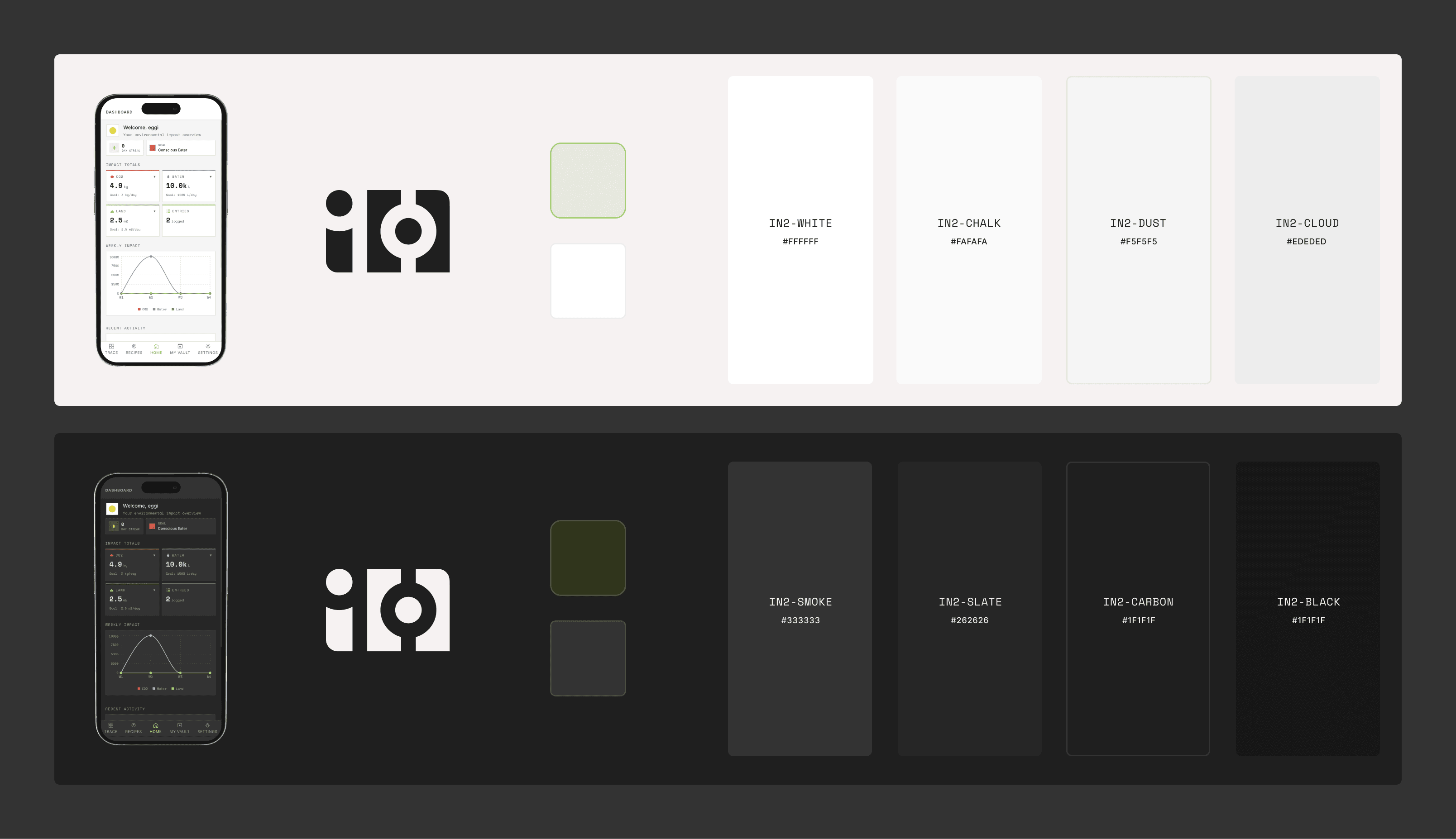
The visual system reinforces this direction. A minimal interface, supported by a geometric icon language and restrained color palette, keeps focus on the data while maintaining a distinctive identity. Light and dark modes adapt the experience to different contexts, balancing readability with a more atmospheric, exploratory tone.
Invisible Ingredients is not just a tracking tool—it is a design exploration into how transparency, data, and AI can support more conscious consumption.
Contribution
Designed the concept end-to-end:
Product concept & system design (flows, structure, features), AI interaction design (analysis, recommendations, generation), UI system (data visualization, light/dark themes, iconography), Visual identity (geometric icon set, minimal aesthetic), Prototyping & build exploration (AI-assisted workflows across tools).
Outcomes
Exploration of AI-assisted design workflows and product thinking:
Developed a system for translating complex environmental data into accessible interfaces
Explored AI-driven features for analysis, comparison, and generation
Defined a scalable visual language for data-heavy products
Iterated rapidly across tools, balancing speed with intentional design decisions
Tools
Figma
Variant
Lovable
Github
Claude